
FORMULA E | LONDON E-PRIX
Motorsport has spent decades helping develop the cars we eventually drive. EVANI went to the London E-Prix to ask a simple question: is Formula E now doing the same for electric cars?
Words and reporting: Craig Law for EVANI
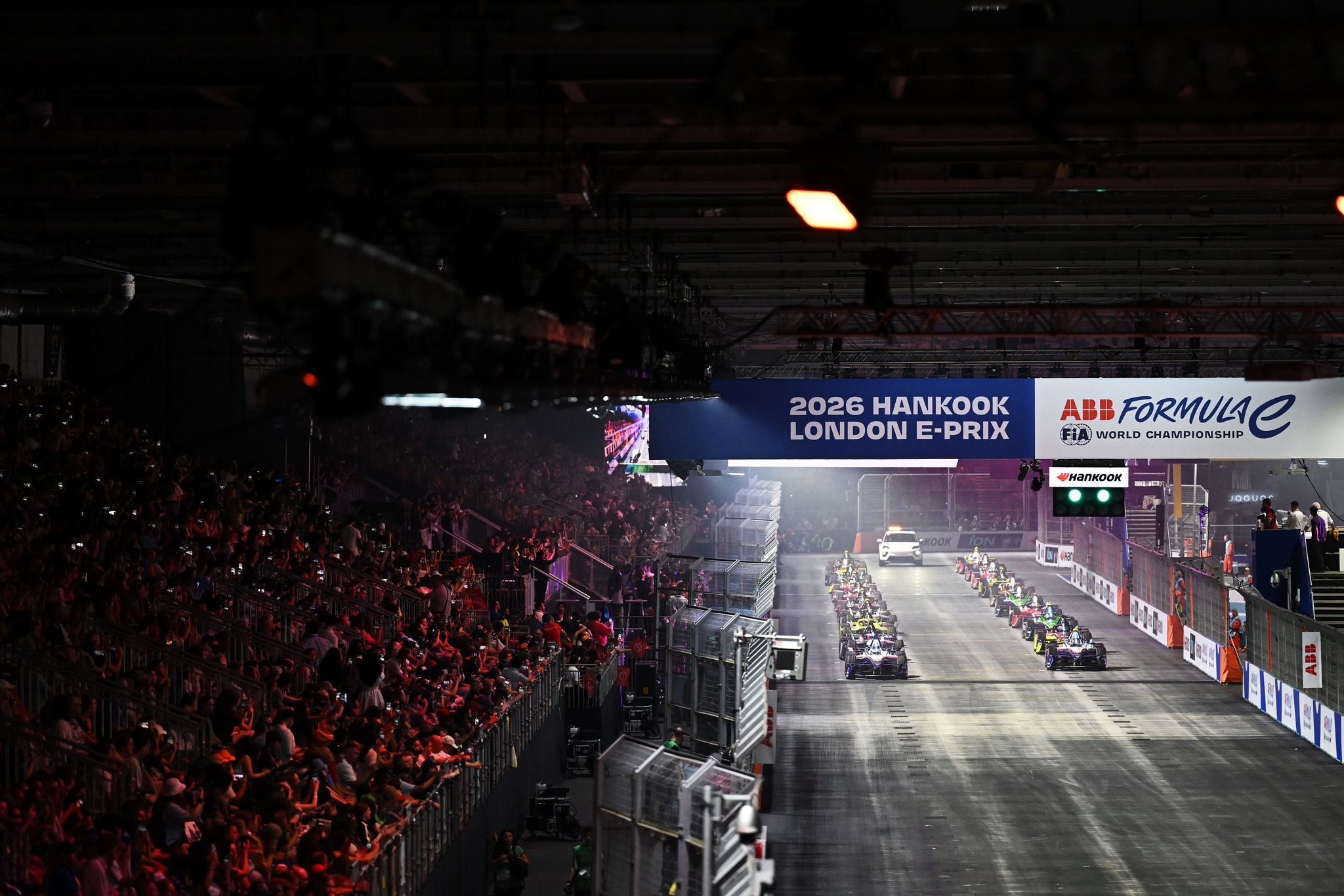
Motorsport has always been about more than racing. Formula One has helped accelerate technologies that eventually reached road cars, from paddle-shift gearboxes and carbon-fibre construction to sophisticated electronics, energy recovery and hybrid systems. So what happens when the racing car is electric?
That was something EVANI director Steven Law wanted to explore at the London E-Prix: not simply the racing, but whether Formula E is helping develop better road-going EVs, changing perceptions of electric cars and ultimately contributing to wider adoption.
When Steven couldn’t make the London weekend himself, he asked his son Craig to take it on. Craig is an EV enthusiast, and is a marketing lead for a small company in London. EVANI put him forward to cover the event and he was subsequently granted media accreditation through FIA Formula E as EVANI’s journalist for the London E-Prix.
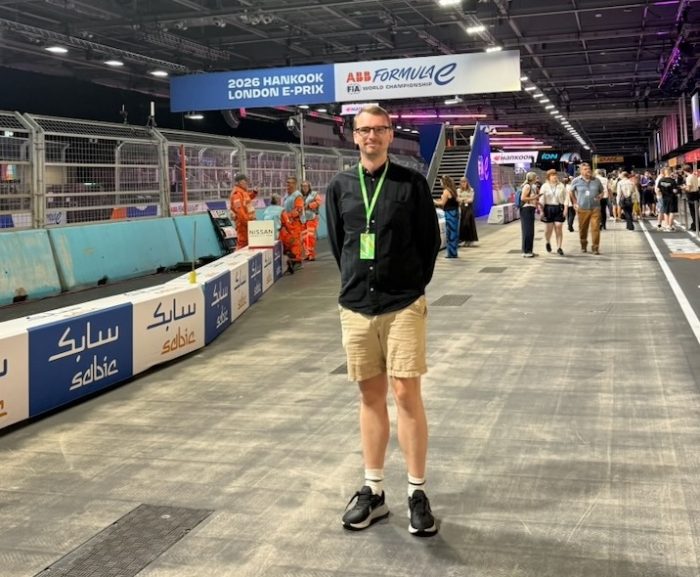
We gave him a fairly simple brief:
Don’t tell us who won the race. Find out what any of this means for the EV sitting on our driveway.
Over two days at ExCeL, Craig spoke to Formula E World Champion Oliver Rowland, Formula E champion Lucas di Grassi, former Formula One drivers Karun Chandhok and Johnny Herbert, and people inside JLR’s Formula E programme who could answer the more technical question: does technology developed in electric motorsport really make its way into the cars we buy?
For a volunteer-led EV organisation from Northern Ireland, it was an unusual opportunity to put our questions directly to some of the people who understand this technology better than almost anyone. Some of their answers weren’t quite what we expected.
First surprise: Formula E isn’t silent
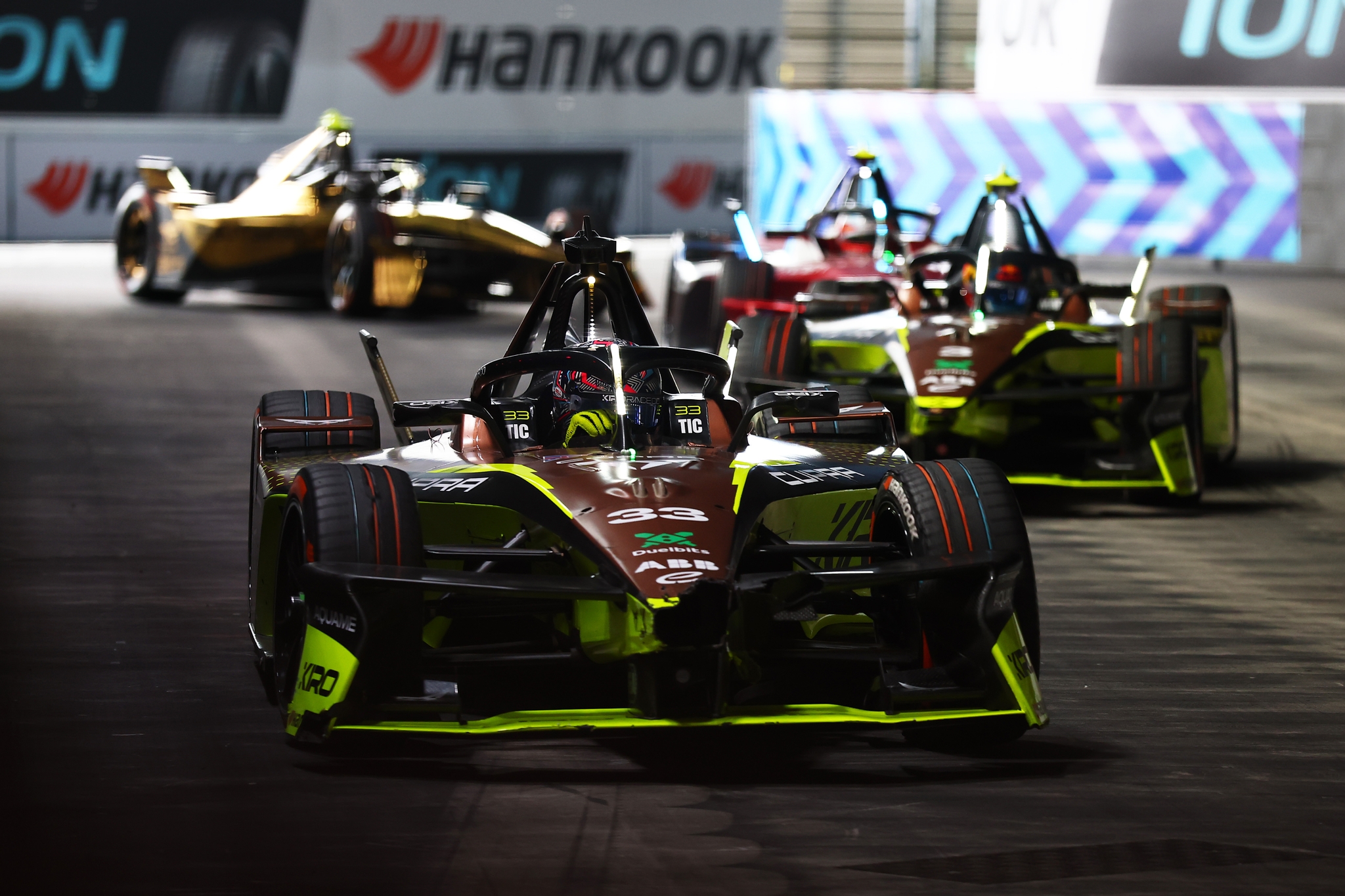
One of Craig’s first observations was surprisingly simple: Formula E isn’t quiet. There’s no combustion-engine soundtrack, obviously, but stand beside the track and these cars certainly aren’t silently gliding past. The electric powertrains, tyres and airflow combine to produce a distinctive sound, amplified further through the indoor section of the ExCeL circuit. You know when the cars are coming.
Craig had visited ExCeL for completely different events before and was struck by its transformation into an international race circuit. The FIA presence, manufacturers, teams, international media and sheer scale of the operation made something else immediately apparent: electric motorsport is being taken very seriously.
But does that make anyone more likely to drive an EV?
Can racing actually change minds about electric cars?
Craig put that question to former Formula One driver and broadcaster Karun Chandhok. Chandhok was cautious about overstating Formula E’s influence on EV adoption. Government policy, taxation and incentives, he argued, are ultimately much bigger influences on whether people make the switch. Formula E can do something else, though.
“It’s about highlighting that electric cars can be cool.”
— Karun Chandhok
It’s an interesting distinction. Formula E may not persuade someone to walk into a dealership tomorrow, but it can challenge the lingering idea that electric necessarily means slow, worthy or uninteresting.
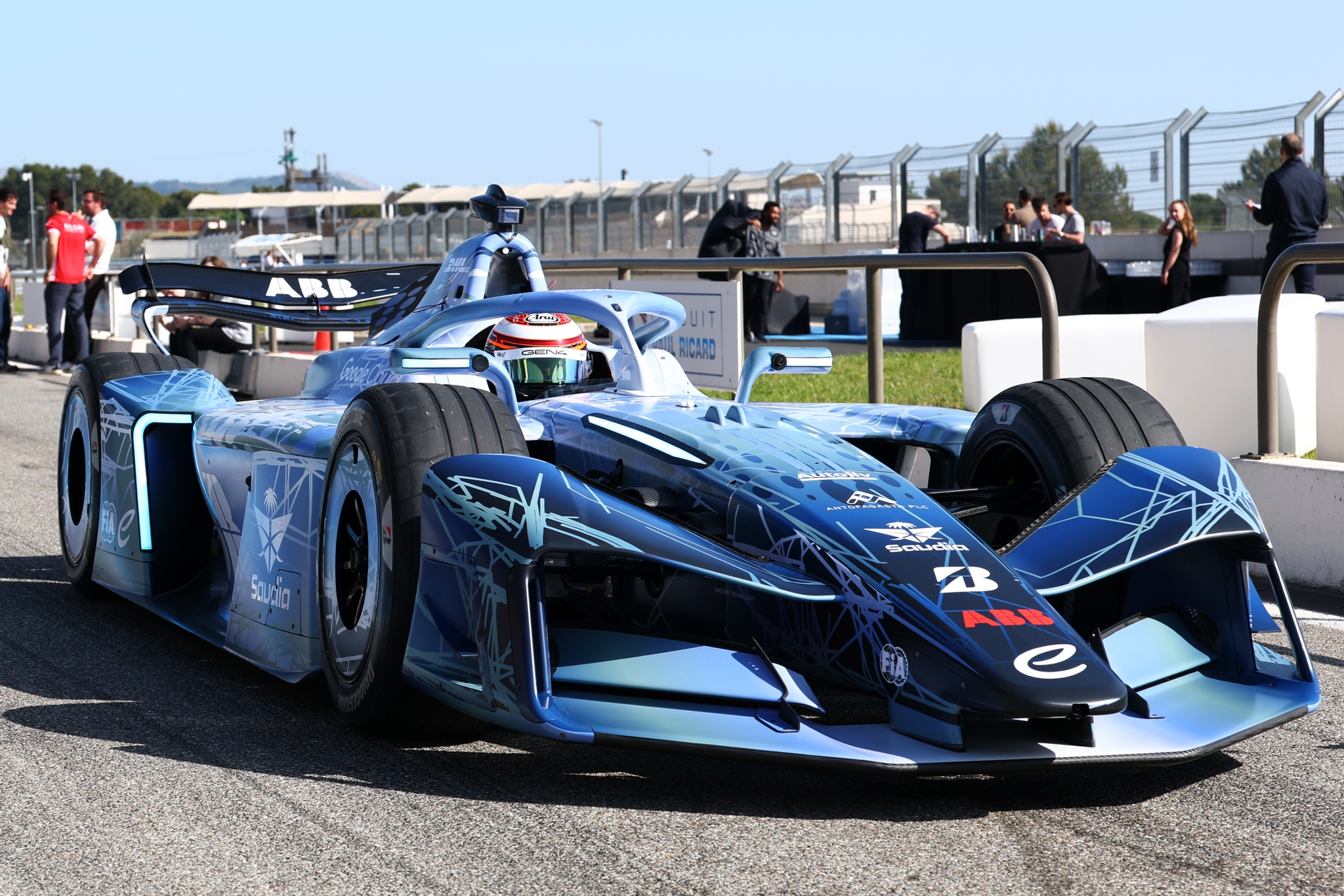
Former Formula One race winner Johnny Herbert, now a brand ambassador for Lola, was more bullish about what comes next. He pointed to just how rapidly Formula E itself has developed. In the championship’s early years, drivers needed two cars to complete a race because the batteries couldn’t cover race distance. A decade later, Formula E is preparing for GEN4, with substantially more powerful, four-wheel-drive cars.
Herbert believes the performance of GEN4 could make considerably more people sit up and take notice.
Formula E champion Lucas di Grassi approached the question differently again. Rather than concentrating on persuading reluctant motorists, he thinks the technology can increasingly speak for itself.
“I don’t see the necessity of changing anybody’s mind.”
— Lucas di Grassi
His argument was straightforward: show people what electric vehicles can do. EVs are becoming more capable, simpler to operate and increasingly affordable. Whether adoption happens somewhat faster or more slowly than expected, di Grassi regards the eventual direction as inevitable.
There was an interesting contrast in his own relationship with cars too. After spending much of his career pushing electric racing cars to their limits, what does he want from a road car? Simplicity. He told Craig that his vision of road transport increasingly involves autonomous vehicles, allowing him to spend journeys doing something productive rather than driving.
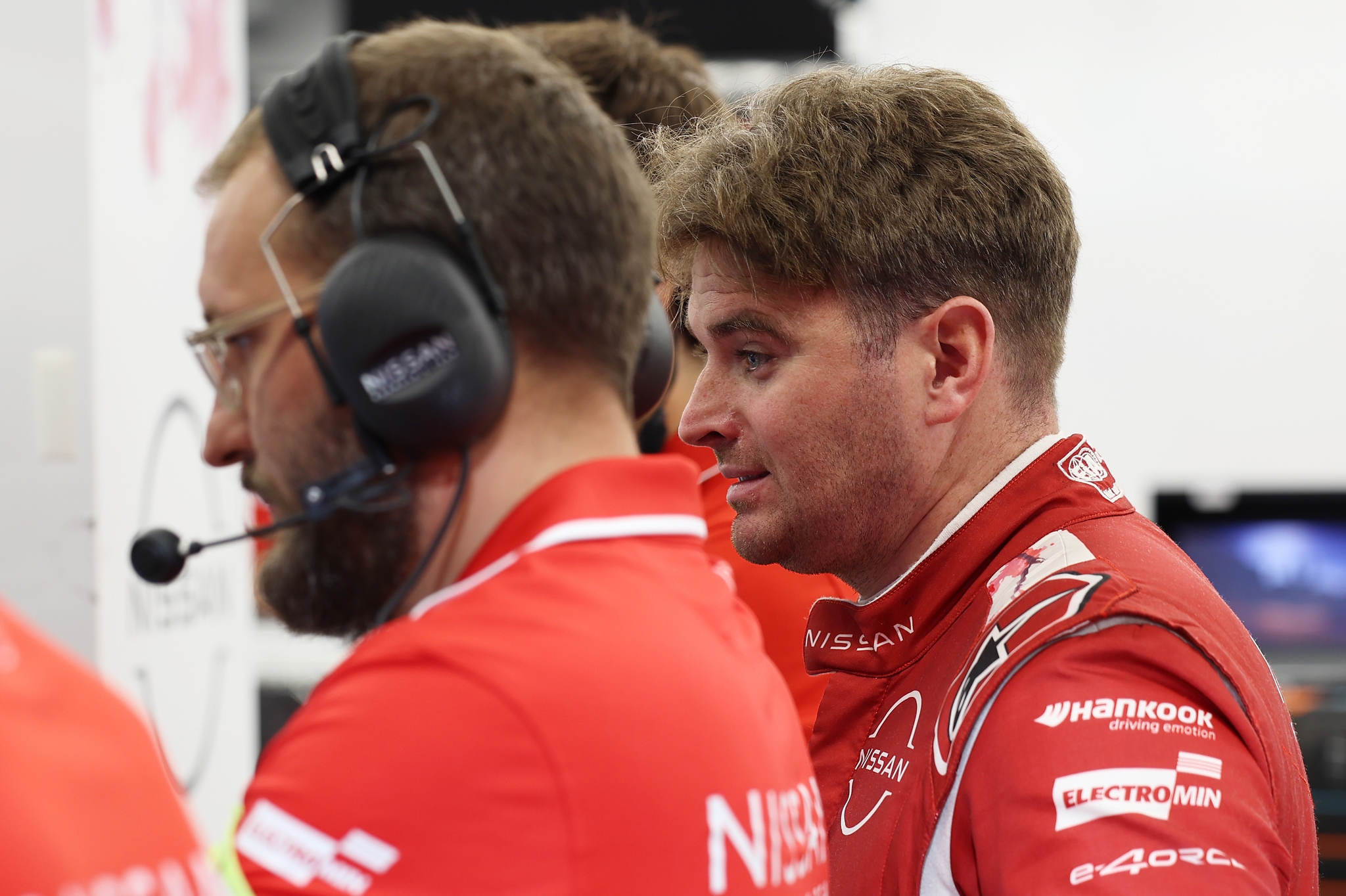
Current Formula E World Champion Oliver Rowland provided perhaps the most relatable answer of the weekend. Ten years ago, he told Craig, he couldn’t have imagined buying an electric car himself. While living in the UK, he subsequently ended up having two.
Rowland said he was pleasantly surprised by the technology and features, although he still identifies charging and range anxiety as areas that need to continue improving. It’s a journey many EV drivers will recognise: sometimes actually experiencing an electric car changes perceptions more effectively than any argument for or against them.
But does the racing actually make our cars better?
This was the question we particularly wanted answered. Chandhok pointed Craig towards software, battery efficiency and powertrain management rather than expecting pieces of a racing car simply to appear in a family EV. Herbert made a similar argument, while di Grassi independently pointed towards software and powertrain development too.
Three separate conversations were leading Craig in essentially the same direction, so he went looking for some actual evidence.
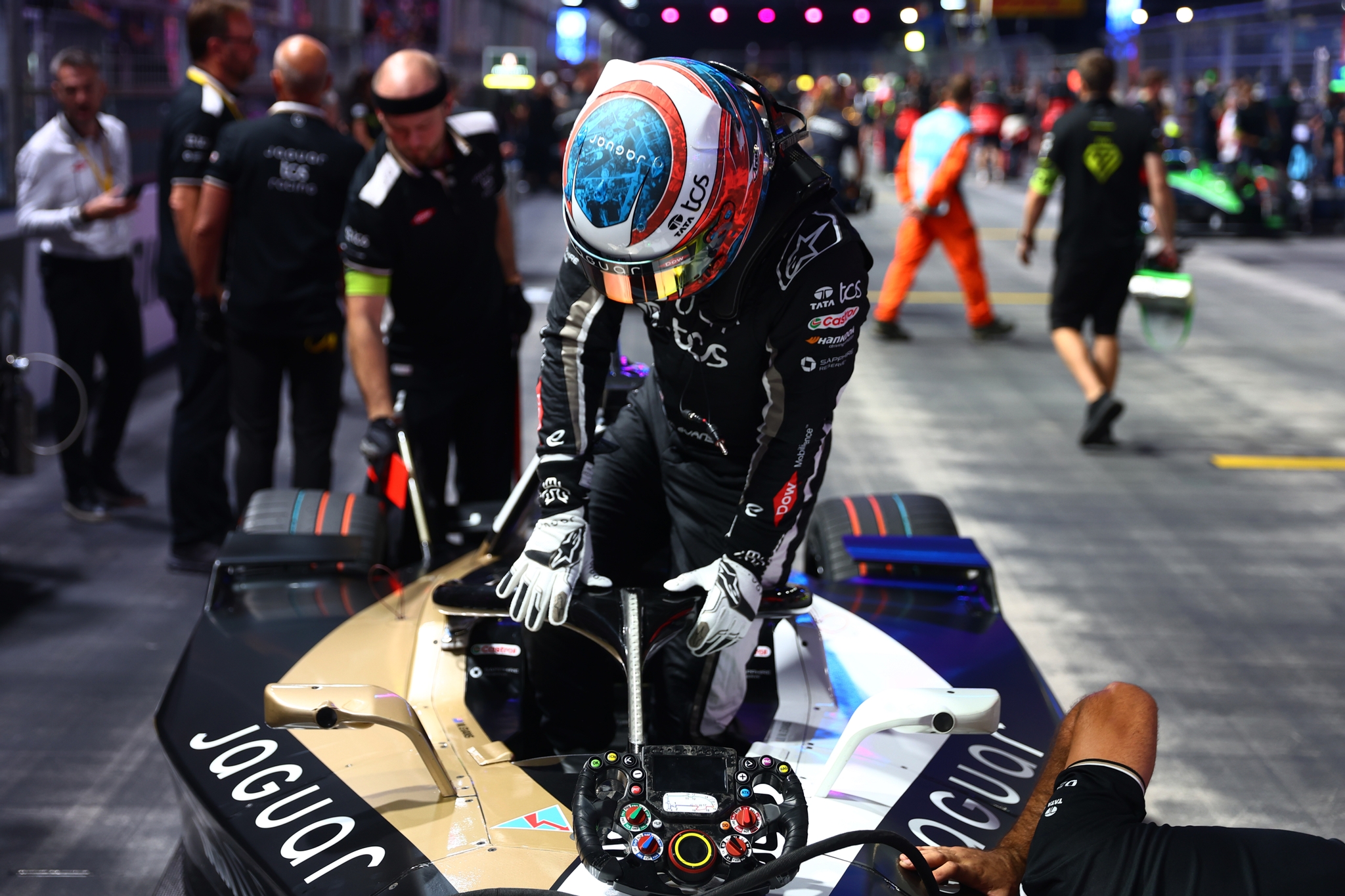
At Jaguar TCS Racing, Craig spoke to Jack Lambert, Head of Technical Innovation at Jaguar Land Rover Motorsport, and asked for specific examples of technology moving between Formula E and its road-car development. It turned out to be a particularly good day to ask: just hours later, Jaguar TCS Racing would be crowned Formula E Teams’ World Champions after a season-long battle that went down to the final weekend in London.
This is where things got considerably more interesting — and, we’ll admit, rather more nerdy.
Racetrack → Road: re-refined fluids
Jaguar’s Formula E programme has worked with Castrol on recovering used transmission fluid and re-refining its base oil so that a very high proportion can be used again. Rather than treating that fluid as waste, the process allows valuable base material to go through the cycle again.
JLR told Craig that learning from this work is now feeding into fluids for its forthcoming generation of electric road cars. It’s a good example of motorsport development that isn’t about making a road car faster, but about improving the materials and processes behind it.
Silicon carbide
Here’s one for the technically minded. Silicon-carbide power electronics offer very high switching efficiency while coping with substantial power and heat loads. Those characteristics matter enormously in Formula E, but they also matter in a road-going EV, where improvements in efficiency can mean getting more useful energy from the battery rather than simply making the battery larger.
JLR has been developing silicon-carbide technology through its Formula E programme for several years. Craig was told that the latest generation of the technology being used in the race programme is closely connected with the company’s forthcoming electric road-car programme.
Charging and thermal management
Formula E also creates an extreme test environment for high-power charging. Putting energy into a battery extremely quickly isn’t simply about providing more electrical power; managing the resulting heat efficiently and reliably becomes critical.
JLR described its race and road development programmes increasingly working alongside one another, using Formula E as a tool to build knowledge and capability ahead of future road platforms. That’s considerably more substantial than simply saying motorsport “drives innovation”.
Jack Lambert, Head of Technical Innovation, Jaguar Land Rover Motorsport, explains how Formula E development is transferring into JLR’s road cars
What does any of this mean back home?
There is another side to this story, because better technology doesn’t automatically mean faster EV adoption. Chandhok’s comments about policy, taxation and incentives are particularly relevant to Northern Ireland.
Only a few miles across the border, the Republic of Ireland is a different jurisdiction with different taxation, incentives, infrastructure and market conditions, and EV adoption there has been developing at a different pace.
The cars don’t suddenly change when they cross the border. Many of the manufacturers are identical and people regularly drive between the two jurisdictions on the same island, yet the conditions surrounding the decision to buy and operate an EV can be very different.
It illustrates something Formula E alone cannot solve. Motorsport can make electric exciting and engineering can make electric cars better, but price, infrastructure, taxation, policy and confidence still have enormous influence over whether people actually buy them.
For EVANI, that’s particularly relevant. We can look internationally at extraordinary advances in electric technology while still recognising the practical barriers facing drivers here in Northern Ireland. Both conversations matter.
So, does Formula E matter?
After two days at ExCeL, the answer isn’t as simple as saying Formula E persuades people to buy electric cars. Perhaps that’s asking the wrong question.
What Craig found behind the racing was an engineering environment in which manufacturers are pushing electric powertrains, software, efficiency, charging and materials exceptionally hard. Some of those lessons really are travelling from racetrack to road.
At the same time, Formula E provides something less technical but still important. It makes electric performance visible: fast, competitive and technologically ambitious. And, as Karun Chandhok put it, cool.
London ends. GEN4 begins.
The London E-Prix marked the end of Formula E’s ExCeL era. Next season, the British E-Prix moves to Brands Hatch at the same time as Formula E introduces the radically more powerful GEN4 cars. Johnny Herbert believes those cars could make people look at electric racing differently. We’ll be interested to see whether he’s right.
For EVANI, London was something of an experiment too. We’re a volunteer-led organisation from Northern Ireland, not a motorsport publication. But representing and informing EV drivers shouldn’t mean limiting the conversation to charging points, range figures and what happens in our own backyard.
There is no reason Northern Ireland should simply be a spectator to the international conversation about where electric mobility goes next. Securing media accreditation through FIA Formula E allowed us to put our questions directly to drivers, engineers and people involved in developing that future.
We’re a relatively small organisation from a relatively small part of the EV market. But sometimes the best way to understand where things are going is to get out there, ask the questions ourselves and bring the answers home.
About this coverage
Craig Law attended the London E-Prix as EVANI’s accredited journalist, with media accreditation through FIA Formula E. Interviews and reporting were conducted at ExCeL London across the E-Prix weekend.
Audio excerpts, where included, are taken from EVANI’s original interviews. Images credited individually where required.
Words and reporting: Craig Law for EVANI
No responses yet