
In our latest annual survey, 9 out of 10 respondents said they had come across negative information that did not align with the experience of their own EV. If you’re thinking about switching to an electric vehicle, it’s understandable to have concerns when faced with misleading online articles or uninformed social media opinions. Let’s break down some common EV myths and set the record straight with hard data, real-world experiences, and facts.
EVs Are Worse for the Environment
Not Enough Range
They Take Too Long To Charge
Not Enough Chargers
Too Expensive
They Burst into Flames
Batteries Don’t Last
Most People Cannot Charge at Home
Rapid Charging Costs More than Diesel
The Grid Cannot Handle Everyone Charging
People are Moving back to Petrol & Diesel
I’m Waiting for Hydrogen
EVs Are Worse for the Environment
When it comes to reducing emissions, battery electric vehicles are already miles ahead of fossil fuel cars and the gap is only growing. A comprehensive lifecycle analysis of UK road vehicles reveals that a new battery electric car produces just one-third of the lifetime greenhouse gas emissions of an equivalent new petrol car (source). This calculation even accounts for the energy-intensive process of producing the battery, which is often cited as a drawback of EVs.
But here’s the kicker, that figure is based on today’s electricity grid. As more renewable energy sources like wind and solar continue to replace fossil fuels, the emissions associated with charging an EV will keep dropping year after year. In contrast, petrol and diesel cars are locked into their environmental impact – burning fuel with no way to improve efficiency over time. Simply put, EVs aren’t just a cleaner option now, they will only become more sustainable as the world moves toward greener energy.
Yes, battery production has an impact, but it’s a one-time cost. However, fossil fuels are mined, transported and burned daily, polluting nonstop. EVs pay their environmental dues upfront, combustion cars never stop collecting.
Not Enough Range
According to Autotrader, the average range of a new EV on sale currently is 236 miles. That’s around 2 weeks driving for most people in the UK. As NI is a relatively small region, cars here tend to drive even shorter distances. According to the Department for Infrastructure, In 2021, each person in NI travelled on average, 4,940 miles, approximately 13.5 miles per day (source).
Of course, not everyone falls into this average. Some of our members have long commutes and regularly cover 20,000+ miles per year, while local taxi drivers are exceeding 45,000 miles per year in their battery electric vehicles. Even for high-mileage drivers, EVs offer a practical and cost-effective solution, delivering significant savings on fuel.
They Take Too Long To Charge
According to the RAC, the average car is driven 4% of the time (source). With the vast majority of charging being carried out at home or at work, the reality for most people is that it only takes a few seconds to plugin the connector and leave the car charging during the 96% of time it is parked up.
On longer journeys the need to top-up on route is important and public rapid and ultra-rapid chargers are getting faster all the time. The latest 400kW chargers rolled out in Northern Ireland can add 100 miles of range in just 5 minutes.
Not Enough Chargers
The UK’s fuelling landscape is shifting rapidly. There are currently around 60,800 fossil fuel pumps spread across 8,329 locations (source). In contrast, as of February 2025, the UK had 75,675 public electric vehicle charging points with 110,588 connectors at 38,350 locations – an increase of nearly a third compared to the previous year (source). On top of that, more than 680,000 home charge points have been installed on private driveways in England alone (source).
While Northern Ireland still lags behind other regions, progress is gaining momentum. Back in 2021, there were only 21 rapid chargers available. Today, that number is approaching 200 (source), a massive step forward in making EV charging more accessible across the region. With continued investment and infrastructure growth, range anxiety is quickly becoming a thing of the past.
Too Expensive
A recent study from EVUK found that more than 80% of people buying a Battery Electric Vehicle (BEV) in 2025 will save money compared to an equivalent petrol car. Those customers will save on average £5,850 across the term of ownership for the 480 scenarios they studied (source).
The used EV market grew 57.4% in 2024 (source) and according to Autotrader, 3-5 year old EVs sold faster than every other segment including petrol or diesel cars (source). They also report that the cheapest used electric cars on offer are under £2,000 and right now, 40% of second hand EVs are under £20,000 (source).
They Burst into Flames
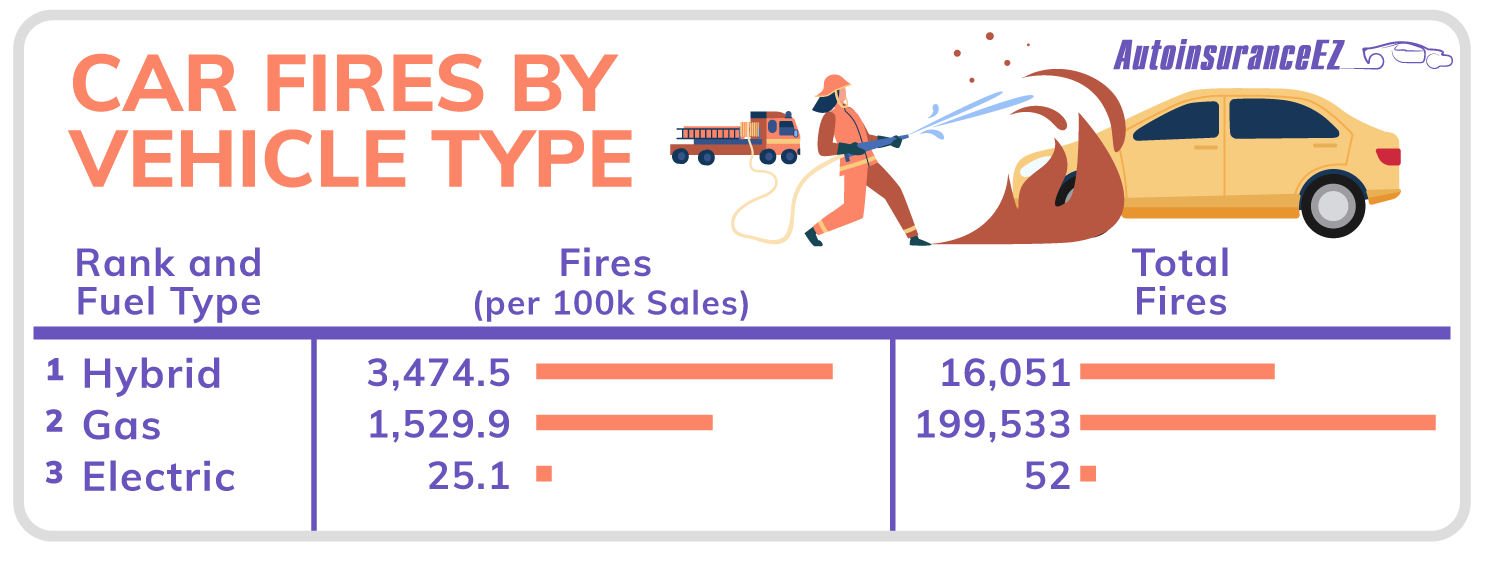
Although electric fires tend to be more difficult than petrol fires to extinguish, multiple studies show that EVs are far less likely to catch fire in the first place. In the US, AutoInsuranceEZ examined data from the National Transportation Safety Board and found petrol powered cars were involved in around 1,530 fires per every 100,000 sold, while battery electric vehicles saw just 25 fires per 100,000 sold (source).
Batteries Don’t Last
New electric vehicles come with battery warranties that typically last at least eight years, offering long-term peace of mind for owners. And of course this does not mean they suddenly fail after that, any more than you’d expect the gearbox to fail in an ICE car after its 3 year warranty expires. In fact, most EV batteries are designed to outlast the practical lifespan of the vehicle itself and will never require replacement (source). Even in the rare occasion where there is an issue, batteries can be opened and repaired and do not need to be completely replaced.
A recent study analysing nearly 300 million MOT tests found that EVs have comparable longevity to petrol and diesel vehicles, dispelling concerns about their durability (source). Modern EVs are built to last and will serve their owners reliably for many years, with battery performance remaining strong well beyond the warranty period.
Most People Cannot Charge at Home
According to research commissioned by the Department for Infrastructure, “circa 80%” of homes in Northern Ireland have access to a driveway (source). That means 8 out of 10 dwellings can benefit from the cost and convenience advantages of charging at home.
Multiple solutions will be required for the 2 in 10 without off-street parking. Some of these cross pavement solutions are currently being trialed here and landlords are beginning to fit chargers at apartments too. For many people, workplace charging is another growing option that will provide access to convenient and affordable charging.
Rapid Charging Costs More than Diesel
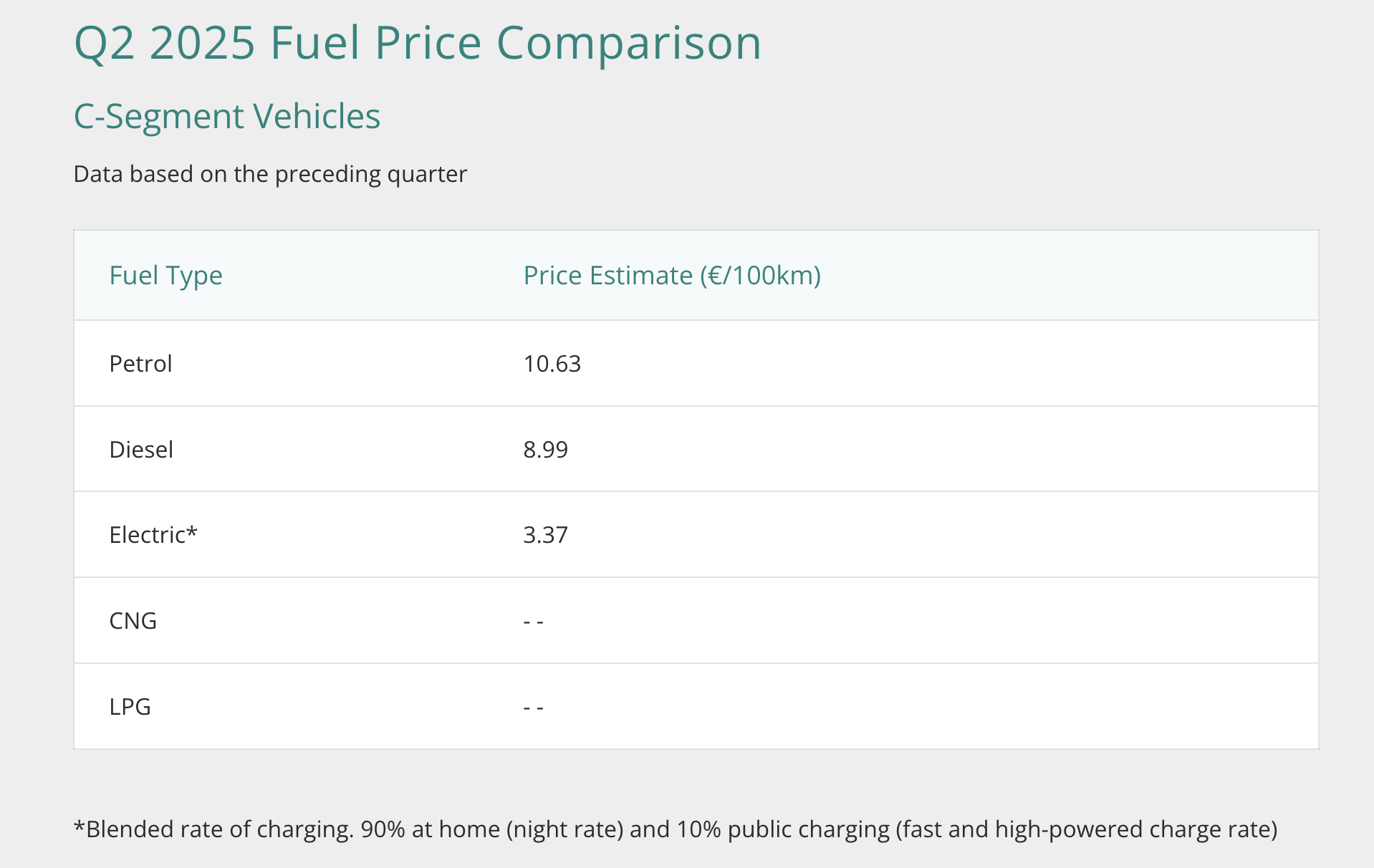
For the vast majority of EV drivers, public charging is a small (but important) proportion of refueling.
While it’s not required in the UK so far, In Ireland, the government mandates the display of fuel price comparisons. Here are the SEAI figures for Q2 2025 which are calculated with a 90/10 split between home and public charging (source). This real-world comparison shows even with some public charging, EVs are around one third the cost of petrol or diesel.
The Grid Cannot Handle Everyone Charging
The Nation Grid has said that even if we all switched to EVs overnight, they estimate electricity demand would only increase by around 10% (source). In future, vehicle-to-grid (V2G) technology will send power back to the grid when needed, so EVs will actually help to support the grid and reduce the need for more power stations.
In Northern Ireland, our DNO (Distribution Network Operator) NIE Networks has a budget of £2.21 Billion to spend across the RP7 (Regulatory Period 7) that runs from April 2025 to March 2031. So our grid continues to expand inline with the energy transition, a global move to electrification that will take decades.
People are Moving back to Petrol & Diesel
Surveys of EV drivers regularly show that 9 out of 10 say they won’t go back to fossil fuels. The Global EV Drivers Alliance (GEVA) held a global survey with responses from over 23,000 EV drivers in 18 countries. 92% of EV owners confirmed they plan to buy another EV for their next vehicle (source). With satisfaction like this, and data showing that sales of Fossil Fuel cars peaked in 2019 (source) it’s little wonder that the vast majority of EV drivers will never look back.

I’m Waiting for Hydrogen
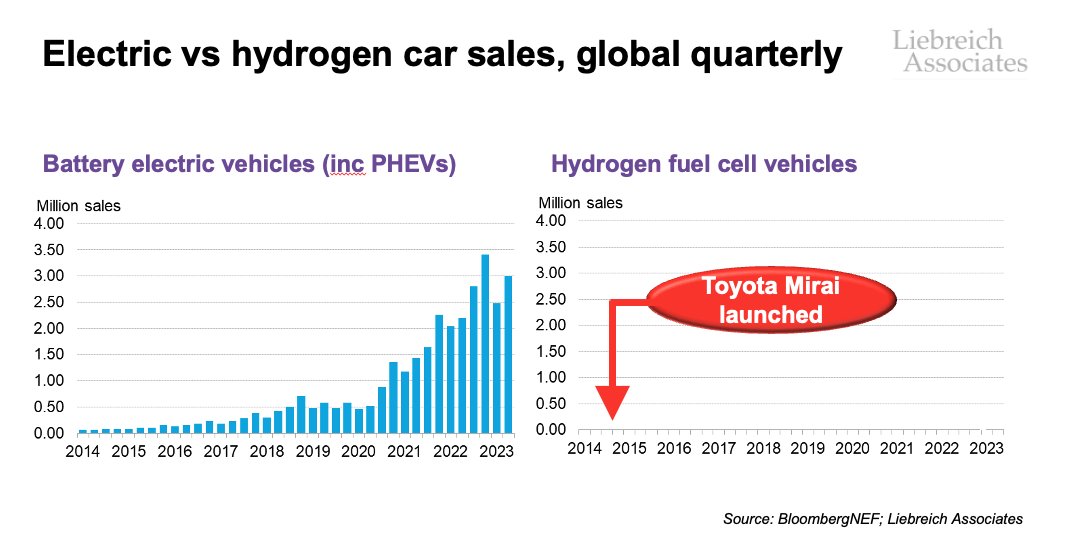
If you’re holding out for hydrogen-powered cars to become mainstream, it might be time to reconsider. The latest update from the Climate Change Committee confirms that by 2040, hydrogen will likely play only a “very niche, if any, role in surface transport” (source). The truth is, hydrogen cars have struggled to gain traction for years, and for good reason. Battery electric vehicles are far more efficient, using about three times less energy than hydrogen fuel cell cars. Despite being available for over a decade, hydrogen cars have failed to take off. The future of clean transportation is already here with battery electric vehicles.