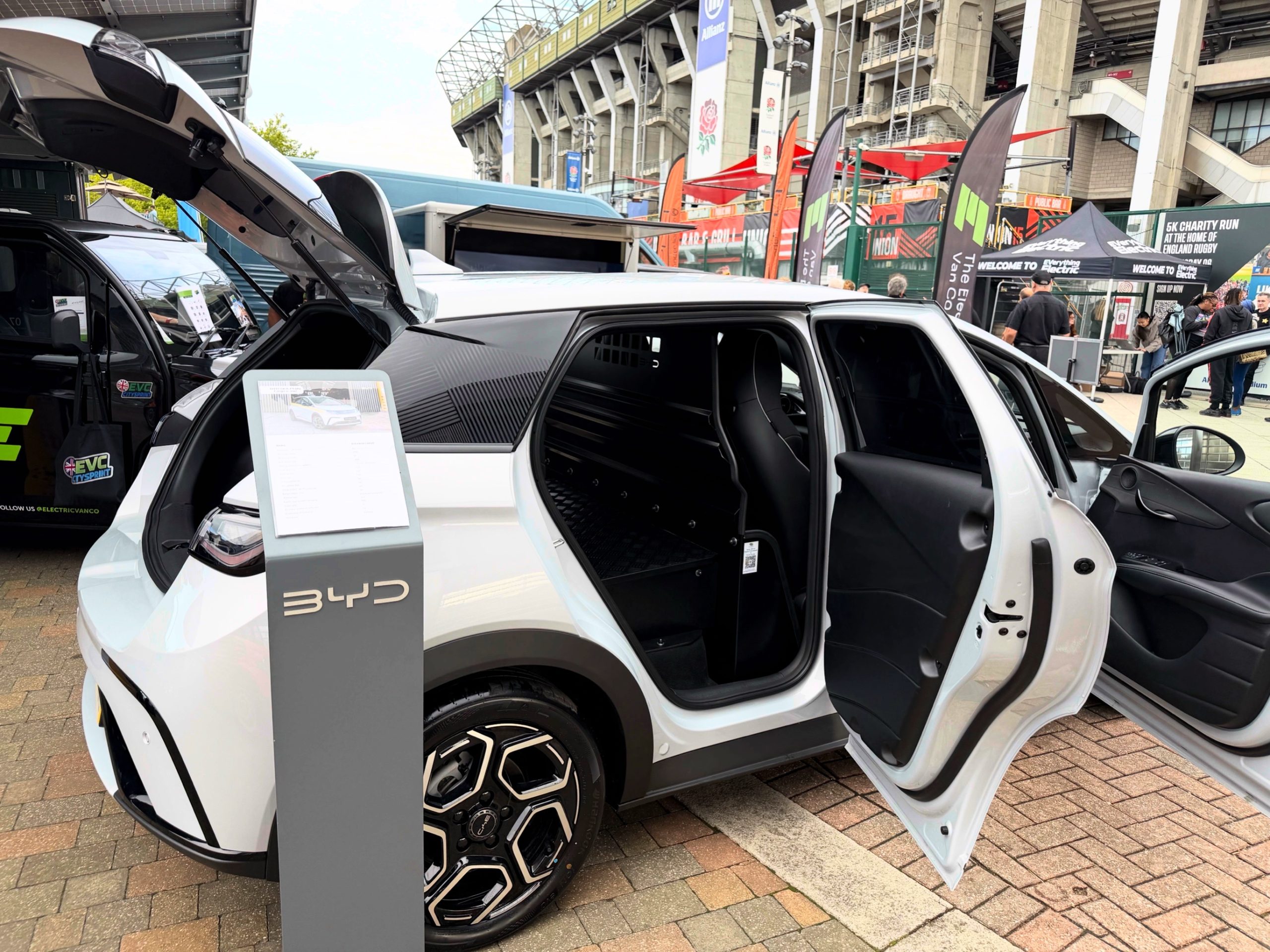
Everything Electric Greater London brought together new cars, charging, energy and some rather different approaches to electric transport at Allianz Stadium, Twickenham.
For EVANI, though, there was another reason for making the trip.
We wanted to look at the event from a Northern Ireland perspective. What does all this new technology and investment actually mean for EV drivers back home?
Northern Ireland remains a relatively small market with its own particular challenges around charging infrastructure, energy and government. We also sit alongside the Republic of Ireland, where the incentives, infrastructure and approach to EVs can be quite different.
So, as well as getting behind the wheel of some of the latest EVs, we spent the day talking to people across the industry and asking where Northern Ireland fits into the wider electric transition.
There was plenty to see – and a few things we hadn’t expected.
Talking electric with Robert Llewellyn
One person we particularly wanted to catch up with was Everything Electric founder Robert Llewellyn.
Rather than talking about the latest cars, we asked Robert about one of the biggest practical barriers to EV adoption: charging for people who don’t have their own driveway or easy access to a home charger.
It’s particularly relevant in Northern Ireland, where expanding accessible public and on-street charging remains an important part of making EV ownership practical for more people.
We then took that a step further and asked about an even more difficult group – people living in flats and apartments. Robert was in little doubt about the scale of that challenge.
Robert’s point about people without access to their own home charger is particularly relevant to Northern Ireland. Moving to an EV is relatively straightforward if you have a driveway and can charge overnight. For those relying entirely on public charging – and particularly people living in flats and apartments – the picture can be very different.
That made some of our conversations elsewhere at the show particularly interesting.
Northern Ireland isn’t simply a smaller version of the GB charging market
One of the most useful conversations of the day wasn’t with a car manufacturer at all.
We spoke to Believ, which develops and operates public EV charging infrastructure.
The conversation quickly turned to Northern Ireland – and, unusually, we didn’t have to spend half of it explaining why things work differently here.
Delivering kerbside charging in many parts of Great Britain frequently involves working with local authorities. Northern Ireland has a different structure around responsibility for roads and associated infrastructure, which can make simply importing models used elsewhere more complicated.
The Believ team were well aware of those differences. We also learned that the company has a Northern Ireland connection within its senior leadership and is actively looking at opportunities here.
Understandably, nobody was going to discuss individual commercial conversations at a public event. What was encouraging was finding an infrastructure company interested in Northern Ireland that already understood some of the complications of operating here.
For a region where greater choice and competition in public charging would be welcome, it’s one we’ll be watching.
Getting behind the wheel
Of course, we couldn’t go to Everything Electric without trying some of the cars.
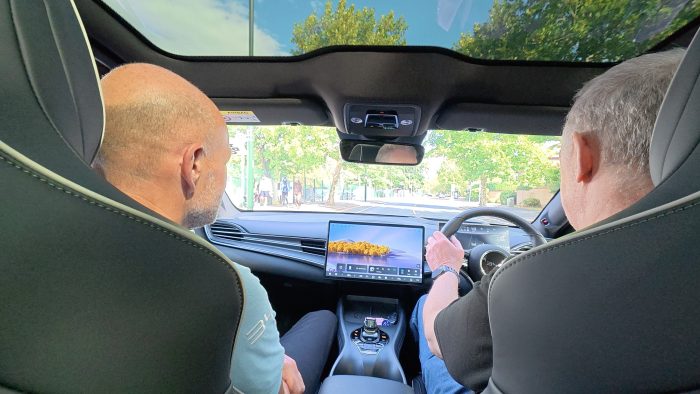
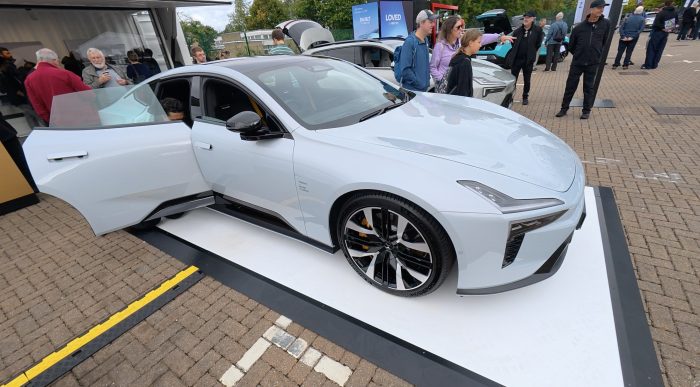
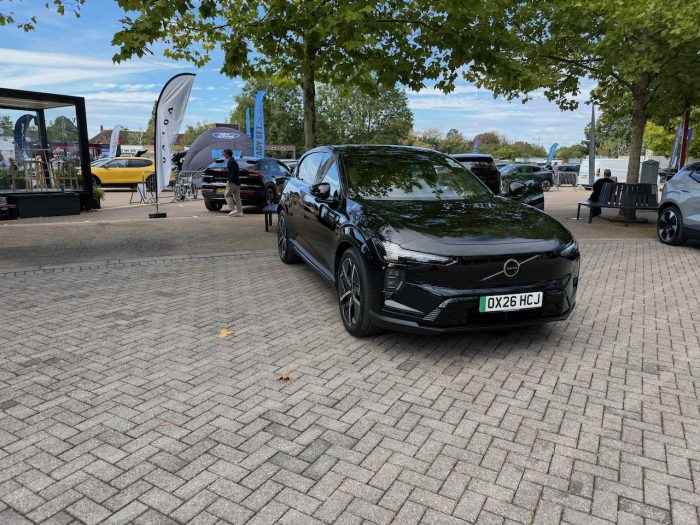
Among those we experienced were the Volvo EX60, BYD Seal and Tesla Model Y, while we also spent time looking around the MG IM5, Geely’s latest offerings and the new Nissan Micra.
The Tesla Model Y was particularly impressive. Whatever opinions surround the Tesla brand, spending some time driving the car was a useful reminder of just how mature the product itself has become.
The latest BYD Seal was another accomplished EV. Perhaps what’s most striking now is how unremarkable that has become. Chinese manufacturers are no longer the newcomers sitting at the edge of the European EV market – they’re increasingly part of the mainstream competition.
We also revisited the MG IM5.
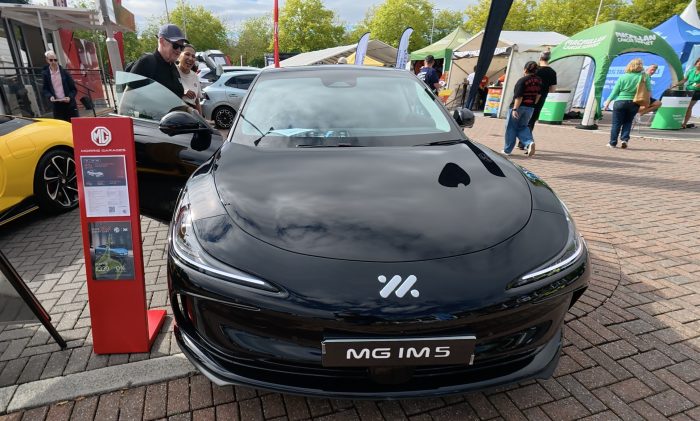
On a previous drive in Belfast we’d experienced considerable reflections from some of the dashboard surfaces. Interestingly, the example at Everything Electric didn’t exhibit the problem to anything like the same extent.
We discussed our Belfast experience with members of the MG team at the show, who were genuinely interested in the feedback. One possible explanation was simply the way the original demonstration vehicle had been prepared rather than an inherent issue with the car.
Sometimes the difference between a design problem and a perfectly good dashboard may simply be rather too much polish.
Geely was another manufacturer that impressed us on first inspection, although unfortunately we didn’t manage to get behind the wheel this time.
And the new Nissan Micra was there too – another example of how quickly the choice of mainstream EVs is expanding.
Selling an EV is about more than the car
A conversation with Volvo raised another issue we’ve encountered closer to home.
We talked to one of Volvo’s training team about the level of EV knowledge provided to people selling their cars.
There is clearly considerable training taking place. But the interesting question is what happens between receiving that training and sitting opposite someone buying their first EV.
A new EV owner doesn’t necessarily need a technical lecture. They do, however, need enough information to understand charging at home and in public, charging speeds, battery percentages, route planning and what manufacturers’ headline charging figures mean in everyday use.
It’s something EVANI hears about repeatedly. The industry can produce increasingly sophisticated electric cars, but making sure customers leave the showroom understanding how to get the best from them remains important too.
Not everything electric needs four wheels
One of the more unusual things we discovered was tucked away in the commercial vehicle area.
Astra Vehicle Technologies (AVT) was showing Musoshi, a compact three-wheeled electric vehicle designed for last-mile deliveries.
It represents a rather different approach to electrification.
Using a full-size van to move relatively small loads through congested streets isn’t always the most efficient solution. Vehicles like this occupy the space somewhere between an e-cargo bike and a conventional electric van.
We spoke to Declan from AVT about the vehicle, who it’s designed for and where this kind of electric transport could fit.
It was exactly the sort of thing we enjoy finding at events like this – something we hadn’t gone looking for, but which demonstrates that the move to electric transport is about considerably more than replacing petrol and diesel cars with battery-powered equivalents.
Yes, an EV can make the coffee
There were some rather less serious demonstrations too.
One that certainly caught our attention involved a bright yellow Renault 5, an equally yellow coffee setup and equipment being powered from the car using vehicle-to-load (V2L).
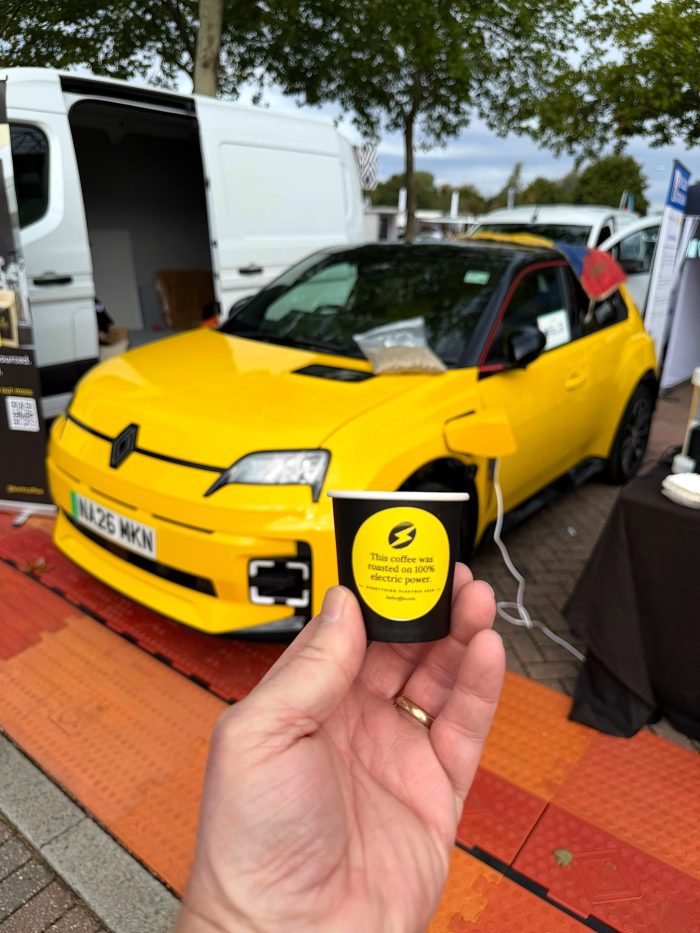
It was a clever bit of theatre, but it also demonstrated something important.
An electric car doesn’t necessarily have to be simply a vehicle containing a large battery. That battery can also become a portable source of energy – whether that’s powering equipment through V2L or, increasingly, interacting with homes and the electricity grid through vehicle-to-home and vehicle-to-grid technology.
Making coffee is perhaps just the tastier way of explaining it.
From Formula E to… Formula E
There was even a connection with some of EVANI’s recent Formula E coverage.
After our recent Formula E trip, Craig found himself back on the streets of Monaco – although this time it was behind the wheel of Hankook’s simulator.
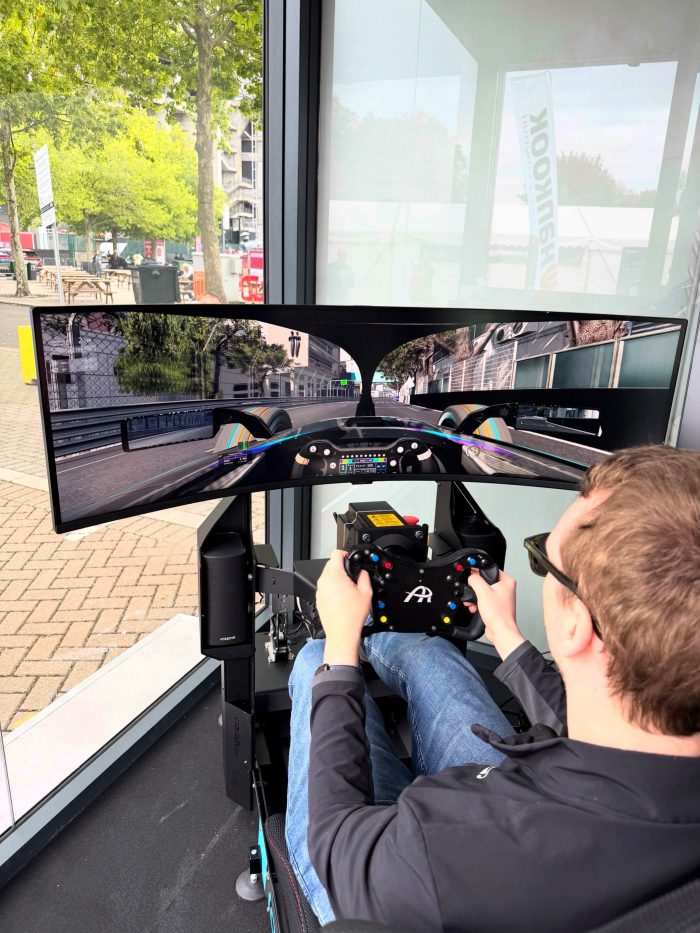
Our conversation with Hankook also uncovered another interesting example of Northern Ireland’s slightly unusual position.
The team explained that its arrangements for Ireland operate separately from Great Britain, with Northern Ireland and the Republic covered together.
It’s a relatively small detail, but another example of why Northern Ireland doesn’t always fit neatly into a supposedly UK-wide approach.
So what did we take away from Everything Electric?
Perhaps one of the more revealing aspects of the day wasn’t any particular car or piece of technology.
At a major UK EV event, we repeatedly found that asking questions specifically about Northern Ireland wasn’t particularly easy.
That’s not a criticism of the people working on the stands. Many appeared to be event, sales or demonstration teams brought in specifically to operate the show rather than the manufacturers’ own communications or market teams.
But it illustrates something EVANI encounters fairly regularly.
Northern Ireland represents a relatively small part of the UK vehicle market, so it’s very easy for us to become an afterthought.
At the same time, we’re an unusual EV market: part of the UK automotive market, sharing an electricity market with the Republic of Ireland, connected by a land border to an EU member state, and with very different structures governing roads and public infrastructure.
There were encouraging signs at Everything Electric.
We met a charging company seriously looking at Northern Ireland and already understanding some of the obstacles. We saw an increasingly broad choice of capable EVs and some innovative ideas about how electric transport could develop beyond simply replacing one type of car with another.
And perhaps that’s the biggest change.
Increasingly, the availability of good electric vehicles isn’t the problem.
For Northern Ireland, the more important question is whether our infrastructure, policy, investment – and the attention we receive from the wider industry – can keep pace.
Everything Electric – all the way home.
No responses yet